


Red, tender, warm, and swollen lumps that may drain pus on their own.
Allergies can be controlled with over-the-counter medications such as Allegra, Zyrtec, Claritin, or Xyzal, if taken on a daily basis. In early spring when the pollen is at its height, you may need additional help controlling the symptoms of runny eyes, itching, sneezing, etc. We can help you navigate the best course of treatements.
Allergies and the common cold can be mistaken for a sinus infection. If you have a history of sinus and allergy issues and over-the-counter medications aren’t workingm you may need to be seen.
Have you ever gotten stung by a bee, wasp, hornet, or deer fly? Some individuals have allergic reactions to these bugs and need interventions as as epinephrine and oxygen when there is throat, tongue, and/or lip swelling with “stridor” or noise of breathing through a swollen space like the throat. If you’re experiencing any of these symptoms, it is imperative you call 911.
Dog and cat bites need immediate attention. Usually we do not close these types of bites, depending on how deep and large the site is – we may recommend treatment in an Emergency Department. We do treat some dog and all cat bites with an antibiotic as the saliva of these animals can be very damaging resulting in a blood infection. A cat bite to the hands will quickly swell as the hands have limited space for fluid to move. We do not treat any bites from animals to the face, you will need to be seen at an Emergency Room/Department.
Animal and insect bites typically cause localized pain, redness, swelling, and itching, with, insects often leaving itchy, raised bumps or blisters. Animal bites (dog/cat) frequently result in scratches, punctures, or deeper lacerations that may bleed or bruise. Severe allergic reactions (anaphylaxis) to stings can cause throat tightening, hives, and difficulty breathing, while infections are marked by increasing pain, pus, and fever.
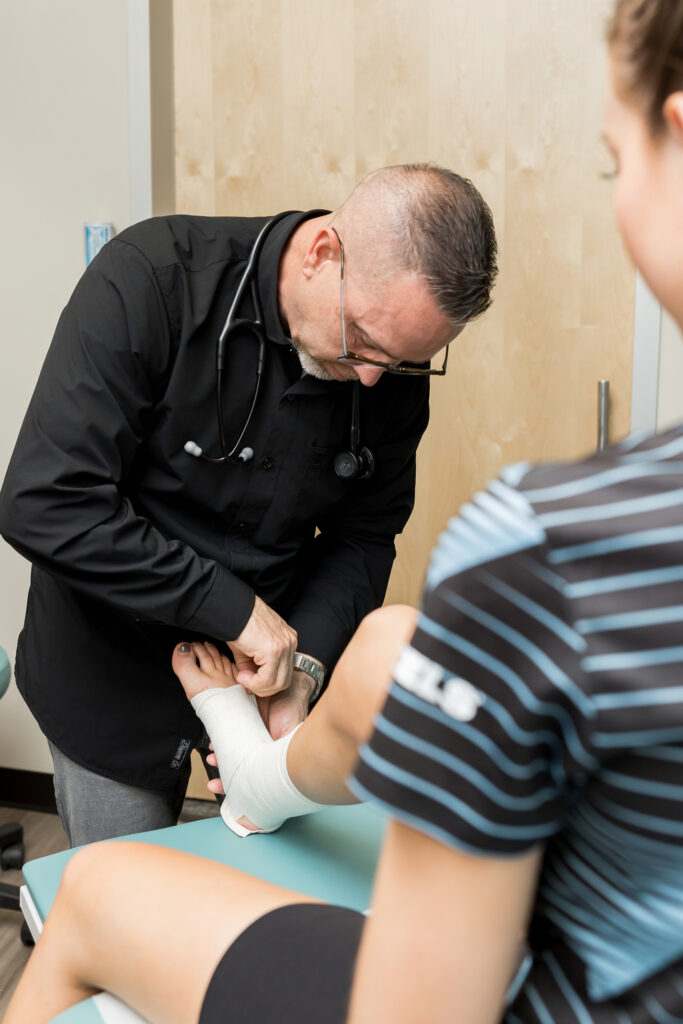
An ingrown toenail (onychocryptosis) is common, painful condition where the corner or side of a toenail grows into the soft flesh of the toe, causing inflammation, pain, swelling, and sometimes infection. Frequently affecting the big toe, it is usually caused by improper nail trimming, tight shoes, or foot trauma.
Common signs include tenderness or pain, redness, swelling, and in some cases, pus or drainage around the nail.
Minor burns, typically first-degree (redness, no blisters) or small second-degree, should be immediately treated by running cool (not cold) water over the area for 10-20 minutes to reduce heat and pain. Remove tight jewelry or clothing quickly. Come see us if the pain persists.
Minor burns, typically first-degree or mild second-degree burns, cause localized pain, swelling, and skin changes, such as redness or mild blistering.
Minor wounds can include abrasions (scrapes) that can happen when skin rubs against a rough surface, cuts (lacerations) that are an openings in the skin caused by sharp objects, and puncture wounds that are small, deep holes caused by sharp, pointed objects like nails.
Minor wounds such as shallow cuts, scrapes, or small punctures typically present with mild, localized symptoms like light bleeding, slight pain/stinging, minor swelling, and the formation of a protective scab within days. We recommend seeing us if the wound shows signs of infection or does not heal within 10 days.
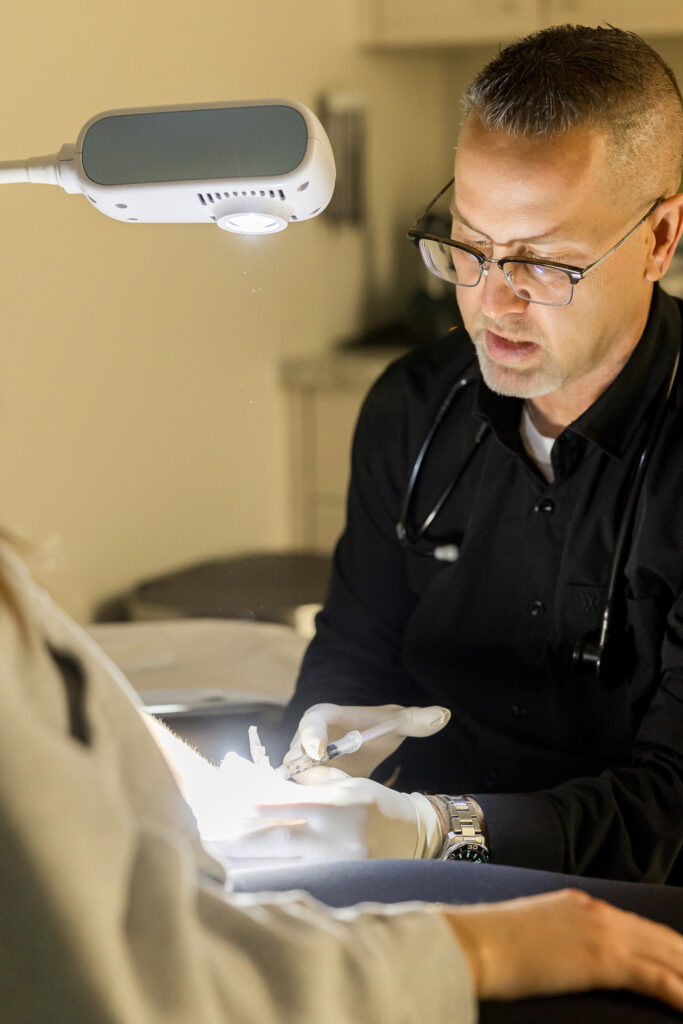
Not all lacerations need to be sutured, some will do well with Dermabond® (glue) and others can be sutured or stapled. The key is to keep the site dry. You would be sent on to an Emergency Room/Department if we cannot manage the repair of the wound.
Minor lacerations are shallow, superficial cuts that typically cause mild, manageable symptoms. Key symptoms include light to moderate bleeding that stops with pressure, pain, minor swelling, and potential bruising around the jagged or torn skin. Come see us if the bleeding doesn’t stop after 10-15 minutes of direct pressure, the wound is deeper than 1/2 inch, the laceration was caused by a dirty or rusty object. signs of infection has developed, you’re experiencing numbness, tingling, or inability to move a nearby joint, or if the wound is on the face or over a joint.
Rashes can be a result of many different microbes. Most will need to be treated if they persist. Some people are born with rashes such as eczema and others develop because of body habits, sports, allergies, or viruses. Most commonly patients seek treatment in our clinic for: Poison Ivy, Shingles, Impetigo, Intertrigo, and ring worm. They may need to be treated with an antibiotic, anti-fungus, and anti-virals because of their contagious nature or symptom discomfort.
Rash symptoms vary but commonly include redness, itching, bumps, or dry, scaly patches, often accompanied by inflammation, swelling, pain, or a burning sensation, appearing as hives, blisters, or raw skin, but a rash with fever, difficulty breathing, confusion, or non-fading bruising requires immediate medial attention.
Skin tags (acrochordons) are common, benign, soft, and usually flesh-colored growths that hang off the skin by a thin stalk, typically in skin-fold areas like the neck, armpits, and groin.
Symptoms are generally painless, but they can become irritated, red, or painful if caught on clothing or jewelry. Contact us if you have questions about removal.
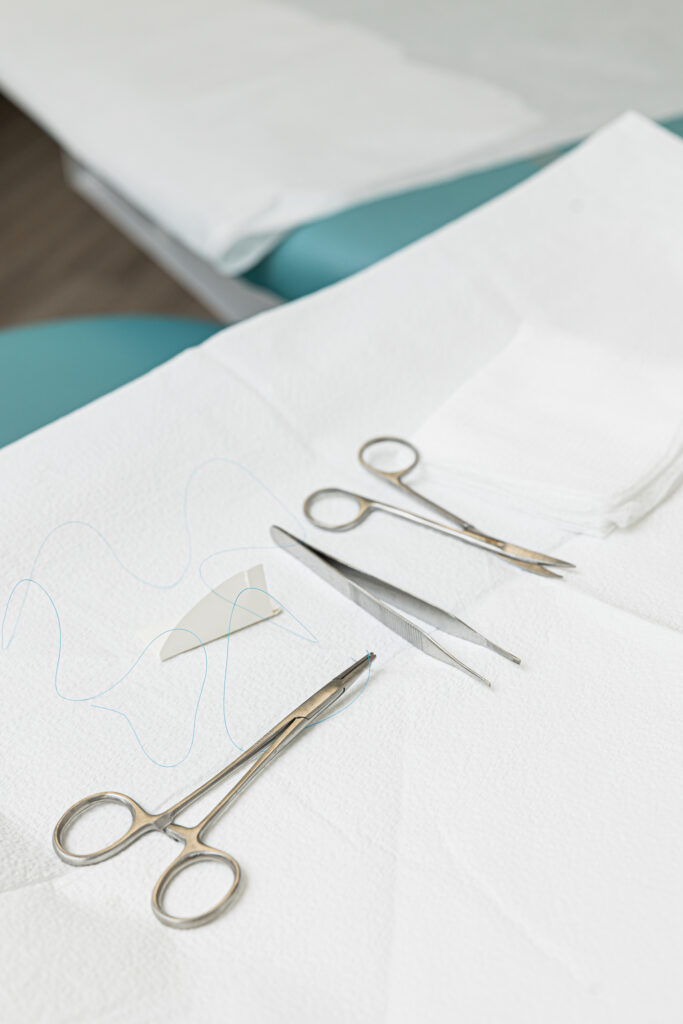
Suture and staple removal is a standard procedure performed by healthcare professionals, typically 7–14 days post-surgery, to remove wound closures using specialized tools. A sterile, specialized remover is used for staples, while surgical scissors and forceps are used for sutures. The process is generally quick, causing minimal discomfort.
Warts often go away on their own, but medical attention is recommended if they are painful, spreading rapidly, bleeding, changing color, or located on the face/genitals.
Plantar Warts (Verruca Plantaris): Hard, thick growths on the soles of the feet, often causing pain or tenderness when walking.
Flat Warts (Verruca Plana): Small, smooth, flat-topped bumps, often appearing in large numbers on the face, neck, or legs.
Filiform Warts: Skin-colored, thin, thread-like growths that often appear around the mouth, nose, or eyes.
Periungual Warts: Growths around or under fingernails/toenails, which can be painful.
Mosaic Warts: Clusters of plantar warts that have merged, often forming a large, flat, hard patch.
Skin tags (acrochordons) are common, benign, soft, and usually flesh-colored growths that hang off the skin by a thin stalk, typically in skin-fold areas like the neck, armpits, and groin.
Symptoms are generally painless, but they can become irritated, red, or painful if caught on clothing or jewelry. Contact us if you have questions about removal.
Monday – Friday: 8am – 8pm Saturday & Sunday: 8am – 5pm Closed all Holidays
info@caring-clinic.com (701) 532-1731
As an NP-owned and operated clinic, we offer daily walk-in care and scheduled primary care services to patients across West Fargo, Fargo, Moorhead, and the surrounding communities. Our commitment is to deliver accessible, high-quality care close to home.